
Route 3 of 5
Vadsøya
Vadsøya is the island just south of the town, and today it is a walking area and bird reserve. Here you will find the foundations of the medieval town, the churchyard from the 1500s, the iconic airship mast and war remains from 1944.
- Stops
- 6 stops
- Distance
- approx. 3 km
- Time
- 1.5–2 hours
- Start
- Sildoljefabrikken, the herring oil factory (west)
- Finish
- War remains (east)
Fishing industry on VadsøyaSildoljefabrikken (the herring oil factory), Fabrikkveien 51
The herring oil factory was established on Vadsøya in 1953 and has not been in full operation since 2003. There was a new trial run in 2009. In 1872 Svein Foyn set up a whaling station a little further east, which only operated for a few years. He built a large complex with an oil-rendering plant, a guano factory and a large workers’ residence.
Source: Vadsø museum – Ruija kvenmuseum
Vadsøya Nature and Culture ParkSouth entrance
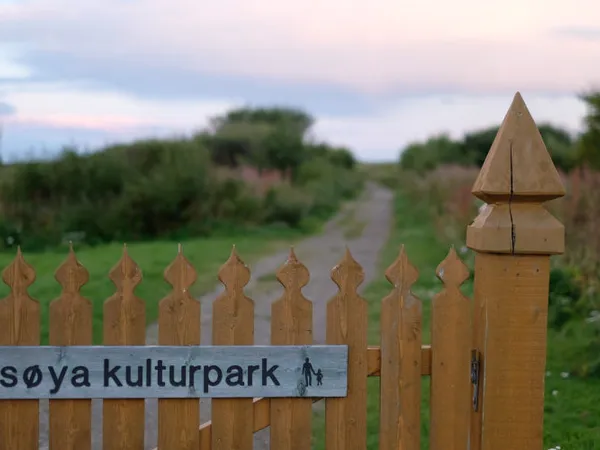
Vadsøya kulturpark is a walking area with many heritage sites. Here you can see house foundations from the 1500s, a churchyard from the 1500s, the airship mast from the era of the North Pole expeditions, and war remains from the Second World War. The first bridge to the island was built by the Germans during the war. In the park there are traces of a trotting track laid out in 1947 and used into the 1950s. The area is also an important breeding ground for many bird species. The culture park is part of the Fotefar mot nord project and has information signs in several languages.
Source: Vadsø museum – Ruija kvenmuseum
→ Vadsøya is a protected nature reserve with a rich bird life. The Gulf Stream keeps the fjord free of ice through the winter, so many bird species spend the winter here — look out for Steller’s eider, coot, phalaropes, pectoral sandpiper, broad-billed sandpiper, grey phalarope, king eider and long-tailed duck.
Russekirkegården (the Russian Cemetery)
Here you will find traces of a timber church from the 1500s. The church was in use until it was moved to the mainland in the 1700s. The bank around the churchyard is still visible. In the 1700s and 1800s the churchyard was used by Russian merchants and sailors, and so became known as Russekirkegården — the Russian Cemetery.
Source: Vadsø museum – Ruija kvenmuseum
House foundations from the 1500s
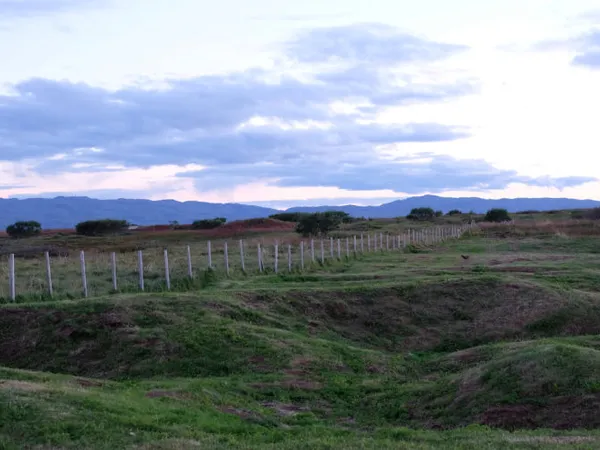
In the 1500s and 1600s there was a medieval town on the north-eastern part of Vadsøya. It has been described as one of the best-preserved town sites in Norway from this period. The grape-cluster-shaped groups of house foundations and the large rounded turf mounds are easy to see in the landscape. The island was both a place of assembly (tingsted) and a church site. In its day the town was one of the largest in Finnmark, with around 250 inhabitants at its peak. The population moved across the sound to the mainland during the 1600s, but the church remained on the island until 1715.
Source: Vadsø museum – Ruija kvenmuseum
Luftskipsmasta — the airship mast for Norge and Italia
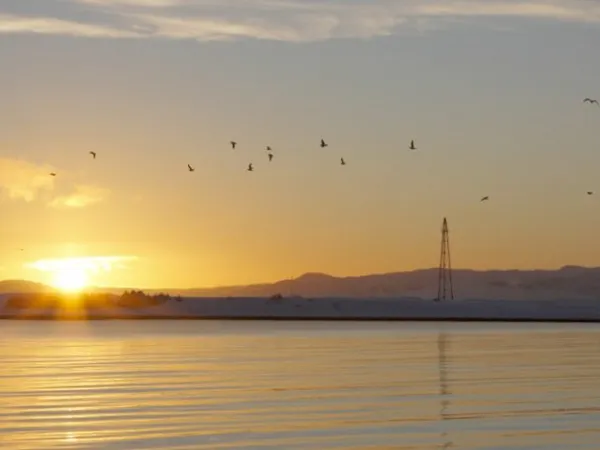
The airship mast was designed by Umberto Nobile and erected by Italian engineers in 1926. That same year it was the landing site for the airship Norge on the Amundsen–Ellsworth–Nobile transpolar flight over the North Pole. In 1928 Nobile made a polar expedition with the airship Italia, which landed at the mast in May that year. Weather conditions in the Arctic Ocean were poor that year, and the expedition ended in disaster. After a major search involving many countries, Nobile and his men were rescued. Roald Amundsen set off in the aircraft Latham to join the search, but was killed when the plane went down off Tromsø on 18 June.
Source: Vadsø museum – Ruija kvenmuseum
War remains
In Vadsøya kulturpark you can see the remains of trenches with bunkers and a gun emplacement from the Second World War on the eastern part of the island. Vadsøya was a smaller fortification among the many large ones built along the Varangerfjord. The strength of the garrison in Vadsø therefore varied between 1,000 and 2,000 men.
Source: Vadsø museum – Ruija kvenmuseum